Retaining wall maintenance protects your yard and home from winter damage. A short inspection before the freeze can save costly repairs in spring. Cold, wet weather stresses walls as water freezes and expands, pushing stones apart and loosening mortar. With proper fall care, you can keep your walls stable, your landscape secure, and your property looking its best through the cold months.
Why Retaining Wall Maintenance Matters
Retaining walls hold back soil, manage water, and shape the landscape. When cracks form or drainage fails, even a small issue can become a major problem. Saturated soil behind the wall increases pressure, while snowmelt adds extra weight and moisture. In the Northeast, repeated freeze and thaw cycles amplify these stresses. Regular maintenance helps prevent costly failures and keeps outdoor spaces safe and attractive.
Inspecting for Early Warning Signs
Start with a careful walk around the wall. Look for:
- Leaning or bulging areas
- Cracks in mortar or between stones
- Loose or missing blocks
- Standing water near the base
- Plant growth inside wall joints
Document what you find. Taking photos helps you track changes and gives professionals a clear reference if repairs are needed later.
Clearing Debris and Managing Vegetation
Fallen leaves, soil buildup, and weeds trap moisture that weakens masonry. Sweep or rinse away debris along the face and base of the wall. Pull out roots and vines that grow into cracks, since they expand and break apart stones over time. Trim back shrubs or groundcovers that block airflow, and make sure sunlight can reach damp areas to dry them out. Clean surroundings help the wall last longer and reduce freeze damage.
Check Drainage and Weep Holes
Proper drainage is the backbone of retaining wall maintenance. Water that collects behind a wall exerts strong pressure and leads to cracking or collapse. Make sure weep holes are open and clear of dirt. If gravel backfill has settled, top it off with clean stone to maintain drainage. Inspect any drain pipes for clogs or damage, and replace crushed sections. A few minutes spent improving drainage now can prevent major repairs later.
Repairing Mortar and Stonework
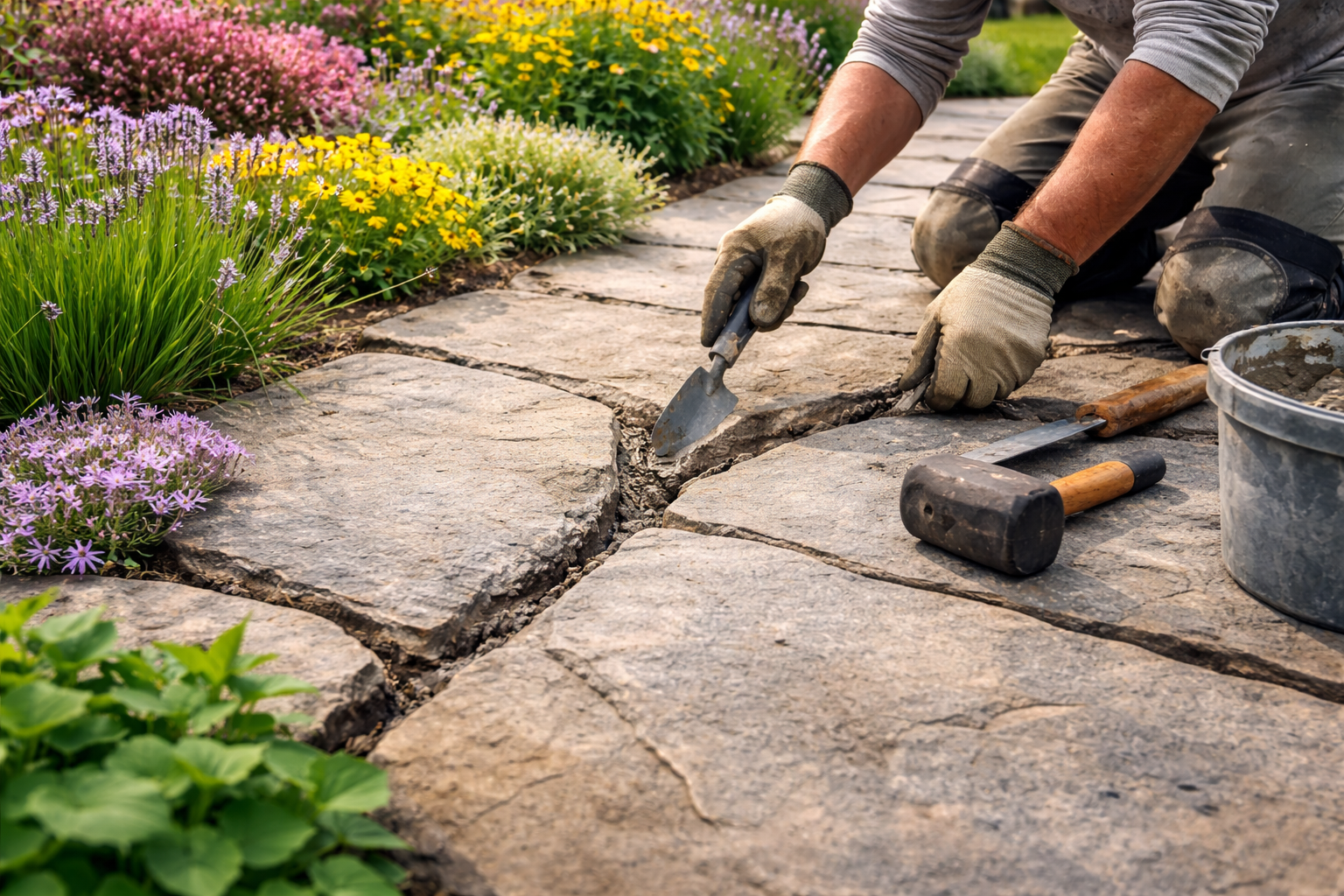
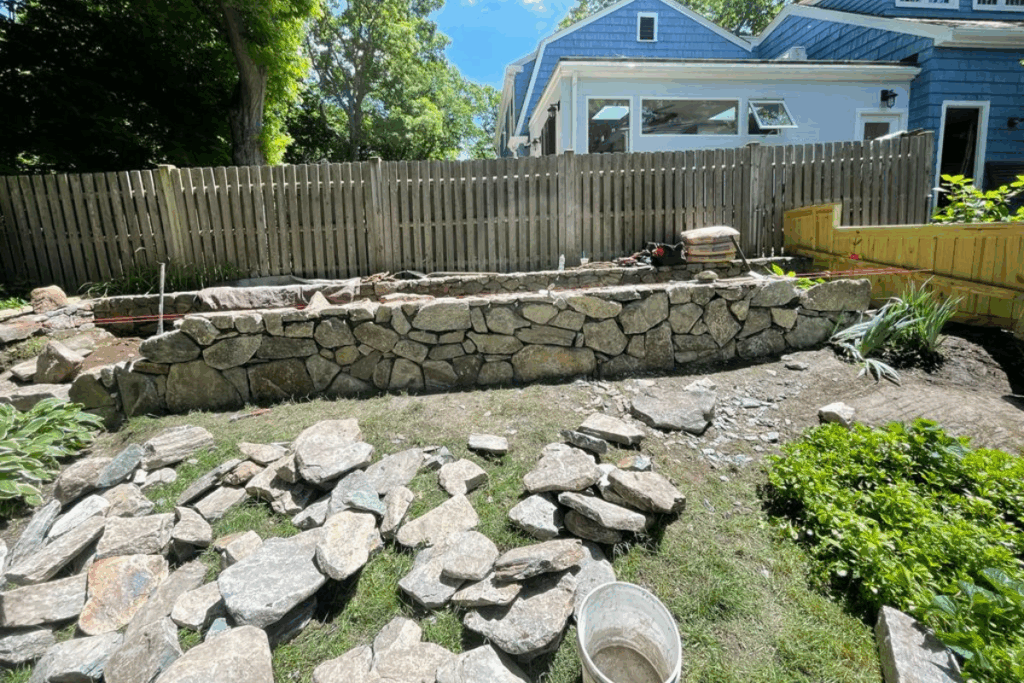
Mortar joints that crumble or separate let moisture inside. Use a chisel or wire brush to remove loose material, then fill joints with fresh, breathable mortar that matches the wall’s color and texture. For dry-stack walls, reset shifted stones tightly and wedge small pieces between larger ones to stabilize them. For mortared walls, remove damaged stones and reset them with new mortar. Keep the structure level and plumb for even load distribution.
Reinforcing the Base and Footing
The base supports the entire structure. If the wall shows signs of settling or washout, dig out soft soil and rebuild the foundation with compacted gravel. Add crushed stone in layers, tamping each one firmly before replacing the next. Tall walls often include reinforcement such as geogrid, which stabilizes soil behind the wall. When that reinforcement fails, or when erosion threatens the footing, a professional repair is the best option.
Preventing Freeze-Thaw Damage
Winter freeze cycles can destroy masonry. Seal gaps and cracks with breathable repair mortar rather than waterproof coatings that trap moisture. Apply masonry sealant only on top surfaces like caps and ledges to repel water without blocking vapor release. Make sure the surrounding grade slopes away from the wall to prevent pooling water. These small steps minimize damage when temperatures drop below freezing.
Quick Fixes Before Winter
Some simple steps can help protect walls until a professional visit:
- Direct water away with temporary downspout extensions or shallow trenches.
- Add clean gravel at the base for better drainage.
- Prop loose stones with sturdy supports to prevent shifting.
- Cover cracked mortar or open joints with a tarp during heavy rain.
These short-term fixes buy time and limit the stress on your wall during severe weather.
Seasonal Cleaning and Ongoing Care
Add wall inspection to your fall cleanup routine. Once leaves finish dropping, sweep debris and clear any clogged drains. Inspect again in early spring for new cracks or bulging. Keeping a written record with photos helps spot changes over time and shows where maintenance has been done. Consistent care improves appearance, safety, and long-term value.
Landscaping Near Retaining Walls
Choose plants that protect your wall instead of harming it. Low-rooted groundcovers and perennials prevent erosion without disturbing the base. Avoid deep-rooted trees or shrubs that exert pressure underground. Consider drip irrigation to control moisture rather than overhead watering, which can saturate soil and increase hydrostatic pressure. Design beds so water flows away from the wall, not toward it.
Snow and Ice Management
Snow piled on top of retaining walls adds weight and water when it melts. Keep that area clear when plowing or shoveling. Avoid using rock salt, which eats away at stone and concrete surfaces. Instead, use sand or non-corrosive grit for traction. These simple choices reduce long-term surface wear and help walls last through harsh winters.
Basic Tools and Supplies
Keep these on hand for light retaining wall maintenance:
- Masonry brush or broom
- Cold chisel and hammer
- Pointing trowel
- Masonry mortar for repairs
- Clean gravel for drainage
These tools handle small tasks safely. For larger repairs or heavy lifting, contact a professional mason or landscape contractor.
When to Call a Professional
Some retaining wall problems need trained help. Call a professional if:
- The wall leans more than a few degrees
- Large cracks run through multiple stones
- Drainage systems fail or collapse
- The wall is taller than four feet
Professionals assess soil pressure, add reinforcement, and rebuild safely. Lassana’s Landscaping offers expert retaining wall maintenance, inspection, and repair. Their team handles drainage improvement, repointing, and wall reconstruction across the Northeast. Learn more on their Retaining Walls and Masonry Services pages.
Cost and Timing Considerations
Basic upkeep—cleaning, patching mortar, clearing drainage—is inexpensive and best done in fall. Larger repairs such as resetting sections or rebuilding footings cost more but last for years. Schedule complex projects before winter or early spring to avoid freeze-related damage. Planning ahead keeps work efficient and prevents emergency costs later.
Safety First
Safety should always come first during retaining wall maintenance. Wear gloves, safety glasses, and sturdy boots. Avoid standing behind loose stones or lifting heavy blocks alone. Follow tool instructions and keep children away from work zones until repairs are complete.
Final Fall Checklist
Before the first freeze, confirm these steps:
- Check for leaning or bulging areas
- Clear debris and open weep holes
- Patch mortar and fill visible cracks
- Add gravel where water pools
- Trim roots or vines from joints
- Avoid snow piles on wall tops
- Schedule a professional inspection if needed
These steps prepare your retaining wall to withstand the winter months and reduce spring repair needs.
Retaining wall maintenance may not seem urgent, but attention now prevents major issues later. A strong wall manages soil, controls water, and shapes the landscape for decades. Taking time to inspect, clean, and repair before winter ensures it stays safe and sound.