Proper snow and ice management protects masonry surfaces and maintains safety throughout the Northeast winter. Using the wrong de-icers can damage stone, brick, or concrete. Choosing safe de-icing methods preserves both function and appearance.
Understanding the Impact of Salt on Masonry
Winter brings snow, ice, and freezing temperatures that can stress masonry. Traditional rock salt melts ice quickly but often harms masonry surfaces. Salt can cause small cracks, surface spalling, and discoloration over time. Repeated exposure accelerates wear and shortens a structure’s life.
Safe de-icing prevents this damage while keeping walkways, patios, and driveways accessible. It’s critical for homeowners and commercial properties to plan winter maintenance carefully.
Why Salt Can Be Harmful
- Surface Erosion: Salt breaks down mortar and stone surfaces, leaving a rough appearance.
- Structural Stress: Salt draws moisture into cracks, causing freeze-thaw expansion and widening fractures.
- Landscape Effects: Runoff can harm plants and grass near masonry surfaces.
- Corrosion: Metal accents and hardware can rust from excessive salt exposure.
Homeowners who prioritize long-lasting masonry understand that alternatives are safer and more sustainable.
Safe De-Icing Alternatives for Masonry Surfaces
Choosing products specifically designed for masonry reduces damage while still keeping surfaces slip-free. Many alternatives provide adequate traction without compromising the structure.
Recommended Options:
- Calcium Magnesium Acetate (CMA): Breaks down ice quickly and has a lower pH than rock salt, reducing surface damage.
- Potassium Chloride: Less corrosive, works in moderate cold, and is safer for stone and surrounding landscaping.
- Sand or Grit: Does not melt ice but increases traction and prevents slips. Use it on stairs, paths, and driveways.
- Urea-Based De-Icers: Safer for masonry surfaces and plants, though it works more slowly in very low temperatures.
These alternatives support safe, effective winter maintenance and reduce costly repairs in spring.
Preparing Masonry Surfaces Before Winter
Winter protection starts before snow falls. Proper preparation minimizes damage and keeps de-icing efforts efficient.
Steps for Masonry Winter Prep:
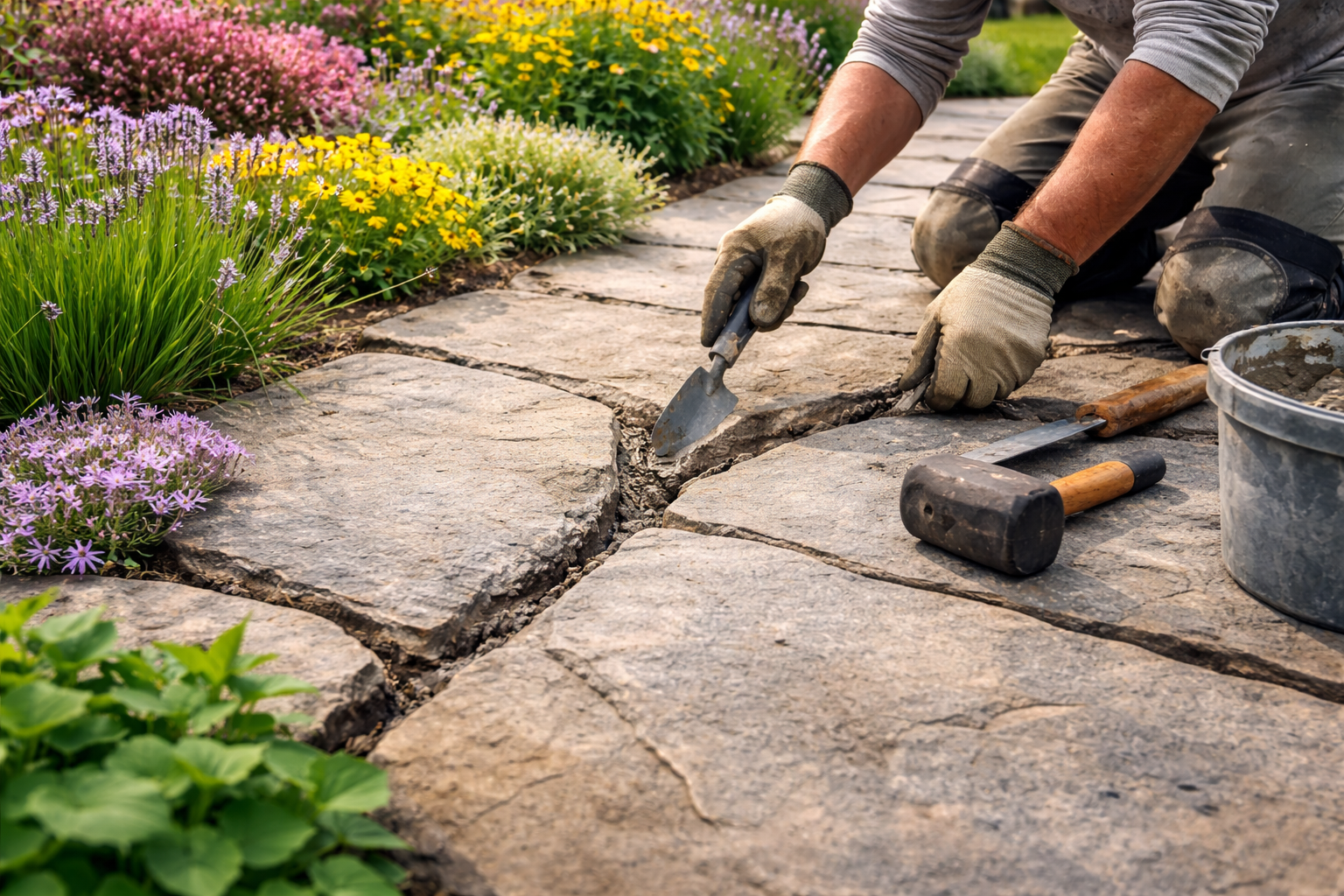
- Inspect Surfaces: Look for cracks, uneven joints, or loose pavers. Minor repairs prevent water infiltration and freeze-thaw damage.
- Seal Stone or Brick: A high-quality sealant blocks water and de-icer penetration. Follow manufacturer directions for best results.
- Check Drainage: Ensure gutters, downspouts, and slopes divert water away from masonry. Standing water accelerates surface wear.
- Remove Debris: Clear leaves, dirt, and organic matter that trap moisture against masonry surfaces.
Starting with prepared surfaces reduces damage and improves traction for the entire season.
Winter Maintenance Tips for Walkways and Patios
Snow and ice accumulation can be managed safely with careful techniques. The right methods protect masonry while keeping spaces usable.
Practical Approaches:
- Shovel Early and Often: Remove snow before it compacts or freezes. Gentle, consistent clearing reduces the need for de-icing chemicals.
- Apply Safe De-Icers Sparingly: Use only the amount needed to prevent slipping. Overuse accelerates masonry wear.
- Use Traction Agents: Sand, crushed stone, or grit increases grip on icy surfaces without chemical damage.
- Monitor Temperature Changes: Rapid freeze-thaw cycles stress masonry. Adjust de-icing strategy to match weather conditions.
Following these steps keeps masonry surfaces intact and walkways safe all winter.
Working with Professionals for Long-Term Protection
Some masonry surfaces or complex layouts require professional assessment. Landscape and masonry experts provide guidance and maintenance services.
When to Call a Professional:
- Significant Cracks or Shifting: Experienced contractors can repair structural issues before winter causes further damage.
- Large Driveways or Patios: Professionals can design safe de-icing plans and suggest suitable materials for high-traffic areas.
- Drainage Concerns: Experts evaluate slope, water flow, and retention issues, preventing moisture accumulation against masonry.
- Sealing and Coating: Proper application of sealants requires skill to maintain effectiveness over several seasons.
Professional guidance extends the life of masonry and ensures a safer, easier winter routine. For masonry services and expert winter preparation, visit Lassana’s Masonry Services and Retaining Wall Solutions.
Spring Checkup After Winter
Even with safe de-icing and proactive maintenance, spring inspections are crucial. Early assessment identifies damage and schedules repairs before problems worsen.
Key Spring Tasks:
- Inspect for Cracks or Spalling: Address any damage caused by winter freeze-thaw cycles.
- Repoint Mortar Joints: Fix eroded or weakened mortar in stone or brick surfaces.
- Clean Surfaces: Remove residual de-icing products and debris with gentle washing.
- Plan Improvements: Identify areas that may benefit from added drainage or protective coatings for next winter.
A structured spring routine protects investments and keeps masonry safe and beautiful.
Final Thoughts: Safe De-Icing and Masonry Longevity
Safe de-icing protects masonry surfaces, prevents costly repairs, and supports winter safety. Choosing alternatives to rock salt, combined with proper preparation, keeps patios, driveways, and walkways intact. Professional guidance adds extra protection, and seasonal inspections maintain long-term beauty. Following these steps results in functional and attractive masonry throughout the Northeast winter.