Neglected garden beds often look worse than they really are. Weeds take over, plants become crowded, mulch disappears, and bare soil starts showing through. With the right plan, many tired beds can be restored without starting from scratch.
Garden bed restoration starts with a close look at the existing space. Some plants may still be healthy and worth keeping. Others may be invasive, damaged, or poorly placed. The soil may also need attention before new plants go in.
A good restoration plan focuses on the bed as a whole. That means looking at plant health, soil, drainage, spacing, and maintenance needs together. The goal is a garden bed that looks better now and stays manageable through the seasons.
Start With a Careful Garden Bed Assessment
The first step is to resist the urge to pull everything out.
Walk through the bed and identify what is growing there. Some plants that look neglected can recover with pruning or relocation. Mature shrubs can also provide structure that would take years to replace.
Look for:
- Healthy plants worth keeping
- Dead or declining plants
- Invasive growth
- Overgrown shrubs
- Crowded perennials
- Exposed roots
- Compacted soil
- Standing water
- Bare areas
- Damaged edging
- Old mulch or excessive mulch
Take note of how much sunlight reaches the bed during the day. Also check areas that stay wet after rain.
These observations help determine what the garden needs next. They also prevent unnecessary removal of plants that still have value.
Know When a Garden Bed Needs More Than Cleanup
Not every neglected bed needs a full renovation.
A basic cleanup can often handle weeds, dead growth, fallen leaves, and light pruning. More extensive work makes sense when the bed has become crowded or invasive plants have taken control.
A full restoration is worth considering when the original planting plan no longer works. Plants may have outgrown their spaces, or the bed may lack enough sunlight for the current plant selection.
Drainage problems also deserve attention before new plants go into the ground. Water that sits around roots can lead to poor growth and recurring plant loss.
Garden Bed Restoration Starts With Removing Problem Growth
Removing unwanted growth is one of the most labor-intensive parts of restoring an old bed.
Start by identifying invasive plants rather than treating every unfamiliar plant as a weed. Some volunteer plants can be attractive and harmless, while invasive species can spread quickly and crowd out other vegetation.
Pulling weeds works well for young plants with shallow roots. Larger invasive plants often require more careful removal.
Digging out the root system helps prevent regrowth. Leaving pieces of roots behind can allow certain plants to return.
Avoid disturbing healthy plants during removal. Mark plants worth keeping before larger cleanup work begins.
Lassana’s offers spring and fall cleanups and invasive plant removal for properties that need more extensive seasonal cleanup and removal work.
Protect Healthy Plants During the Cleanup
A neglected bed does not mean every existing plant needs to go.
Older shrubs can provide valuable structure. Established perennials can also recover after years of poor maintenance.
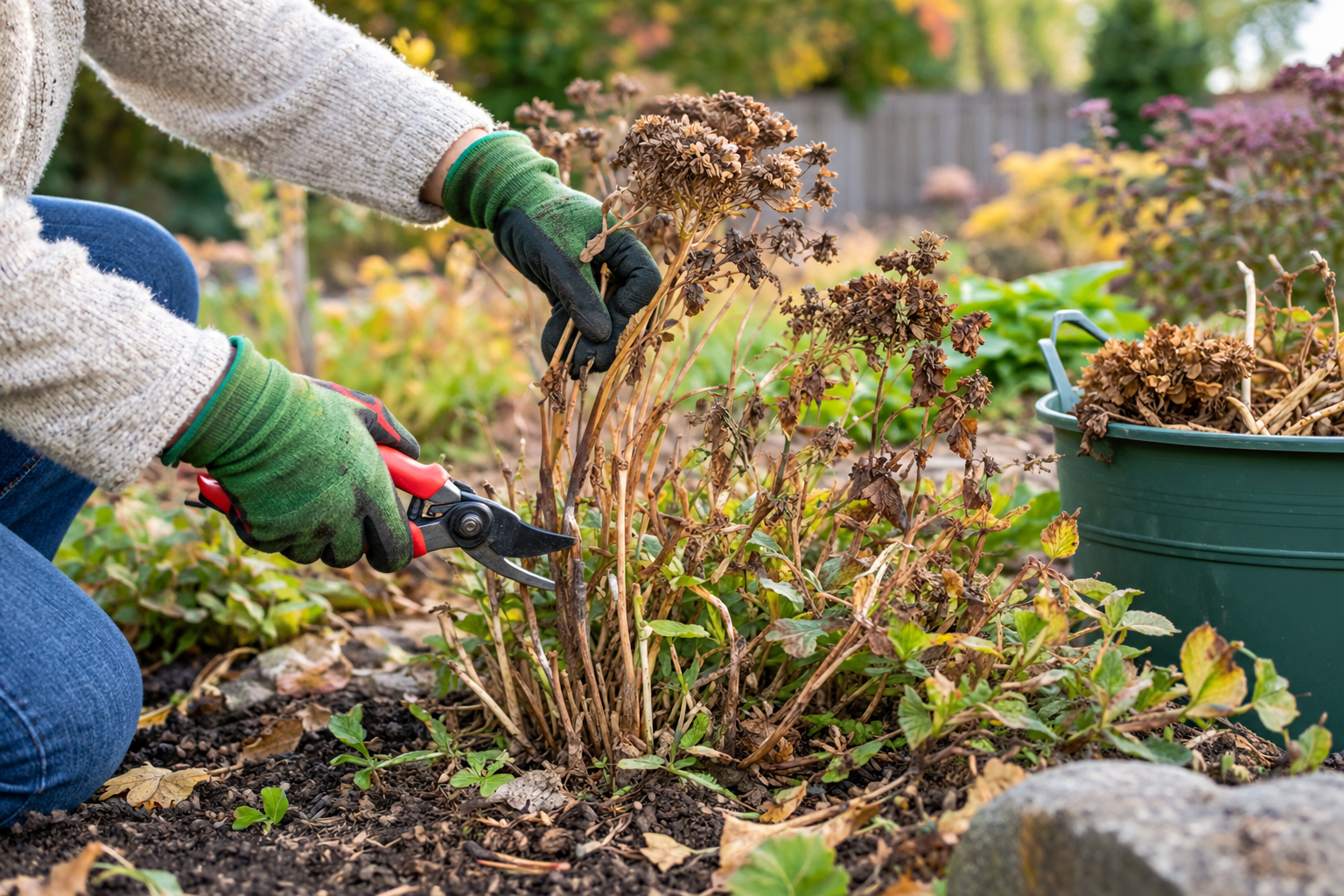
Work around healthy plants rather than clearing the entire bed at once. Remove dead stems and damaged growth first. Then look at spacing between remaining plants.
Crowding creates problems over time. Plants compete for light, water, and nutrients when they grow too close together.
Some plants can be divided and moved to open areas within the same bed. Others can be relocated to a different part of the property.
This process saves healthy plant material and reduces the number of new plants needed.
Improve the Soil Before Replanting
Good plants still struggle in poor soil.
Years of foot traffic, construction activity, weed growth, and heavy equipment can compact the soil. Compacted soil restricts air and water movement around plant roots.
Loosening the soil helps roots spread into the surrounding area. Adding organic matter can also improve soil structure.
Do not automatically add large amounts of fertilizer. Soil conditions should guide the decision. A soil test can provide useful information about pH and nutrient levels.
Compost can improve soil structure and add organic matter. It works best as part of a broader soil management plan rather than a quick fix.
NOFA Organic Land Care promotes practices that protect soil health and support biological activity in landscapes. Their standards provide a useful reference for homeowners interested in healthier garden management.
Check Drainage Before Adding New Plants
Water problems often hide beneath an overgrown garden bed.
A bed that stays wet after rain can create poor growing conditions for many plants. A bed that dries out quickly can create a different set of challenges.
Watch the area after a heavy rain. Look for puddles that remain after surrounding areas have drained.
Also check whether downspouts send water directly into the planting bed. Runoff from patios, walkways, and driveways can affect soil moisture.
Correcting drainage before planting saves work later. New plants should not be expected to solve a grading or drainage problem.
Rebuild the Bed With a Clear Planting Plan
Once the bed is clean and the soil is ready, start planning the new planting arrangement.
Think about mature plant size rather than the size of the nursery container. A small shrub can grow several feet within a few years.
Place taller plants toward the back of the bed when the bed sits against a wall or property boundary. Use shorter plants toward the front.
For beds visible from several directions, place taller plants closer to the center. This creates a gradual transition toward the edges.
Spacing also matters. Plants need enough room to reach their mature size without constant pruning.
A thoughtful layout reduces crowding and makes future maintenance easier.
Choose Plants That Match the Site
Plant selection should follow the conditions already present in the garden.
Start with sunlight. A full-sun plant will struggle in a deeply shaded bed. Shade plants can suffer when exposed to intense afternoon sun.
Then consider soil moisture. Some plants prefer consistently moist soil, while others perform better in well-drained locations.
Also think about seasonal interest. A garden bed can include spring flowers, summer blooms, fall color, and winter structure.
Lassana’s garden bed services include design, plant selection, installation, mulch, edging, and ongoing maintenance. Our team considers sunlight, soil, drainage, and seasonal performance when selecting plants for Northeast properties.
Add Native Plants Where They Fit
Native plants can bring value to a restored garden bed.
They support local wildlife and often fit regional growing conditions well. They also add variety to beds that rely heavily on common ornamental plants.
Massachusetts has hundreds of recorded native bee species, and UMass research notes that some native bees depend on specific plant families for pollen.
That makes plant diversity worth considering during a restoration.
Native plants still need the right location. A native species placed in the wrong soil or light conditions can struggle just like any other plant.
Choose plants based on the site first. Then look for native options that match those conditions.
Use Mulch to Finish the Bed
Fresh mulch can make a restored garden bed look finished almost immediately.
It also helps reduce weed growth and slows moisture loss from the soil. A consistent layer creates a cleaner transition between planting areas and surrounding lawn or hardscape.
Avoid piling mulch against plant stems or tree trunks. Thick mulch around stems can trap moisture and create other problems.
A moderate layer spread evenly across open soil is usually enough. Recheck the depth each season rather than adding a new thick layer without removing or redistributing old material.
Keep Garden Edges Clean and Defined
A clear edge gives a restored bed a finished appearance.
Garden edging also keeps mulch from spreading into nearby lawn areas. It creates a visible boundary that makes routine maintenance easier.
The edge does not need to be elaborate. A clean soil edge can work well for informal gardens. Stone or other edging materials can create a more structured appearance.
The right choice depends on the home’s style and the surrounding landscape.
Create a Maintenance Plan That Fits the Property
A garden bed can return to its old condition without regular care.
Maintenance does not need to take hours every week. A simple seasonal routine can prevent most beds from becoming severely overgrown.
Focus on:
- Removing weeds while they are small
- Pruning plants at the proper time
- Refreshing mulch as needed
- Removing dead plant material
- Checking for drainage problems
- Dividing crowded perennials
- Watching for plant disease
- Replacing plants that repeatedly fail
The amount of maintenance should also influence plant selection. A homeowner who prefers a low-maintenance yard should not choose a bed filled with plants that need frequent pruning.
Restore the Bed in Phases When Needed
Large garden beds do not always need to be restored in one weekend.
Breaking the work into sections can make a large project easier to manage. Start with the most overgrown area and work outward.
This method also gives homeowners time to see how existing plants respond to pruning and cleanup.
A phased project can be useful for larger properties where several beds need attention. It also helps spread planting and maintenance costs over time.
Watch the Bed Through the Seasons
Restoration does not end when the new plants go into the ground.
Check the bed during spring, summer, and fall. Look for plants that are growing faster than expected or areas that stay too wet.
Pay attention to gaps that appear after the first growing season. A gap may indicate that a plant needs more sun, better drainage, or different spacing.
Seasonal observation gives homeowners useful information for future adjustments.
Know When Professional Restoration Makes Sense
Some garden beds have been neglected for years and require more than basic cleanup.
Large invasive growth, mature shrubs, poor drainage, compacted soil, and extensive plant loss can make a restoration project difficult to handle alone.
Professional help also makes sense when the bed is part of a larger landscape renovation. The planting design needs to work with existing patios, walkways, drainage, lawns, and other features.
A professional can assess the entire area and develop a practical plan instead of treating each problem separately.
A Neglected Garden Bed Can Have a Fresh Start
Garden bed restoration does not always mean removing everything and starting over. A careful assessment can reveal healthy plants, useful structure, and opportunities to improve the existing space.
Start with cleanup and invasive removal. Then address soil, drainage, spacing, and plant selection. Finish with mulch and a maintenance routine that fits the property.
The result should be more than a cleaner garden bed. It should be a planting area that works with the site and remains manageable through the growing season.
For homeowners who want help bringing an overgrown bed back into shape, contact Lassana’s for a free estimate and discuss the right plan for your property.