The last few weeks before snow shape how your lawn looks in April. Winterizing your lawn on the North Shore comes down to three jobs: the final mow, the right kind of feeding, and a clean surface going into winter.
Our fall lawn care checklist covers the whole season. This post focuses on the final stretch, when growth slows and the first hard freeze is close.
When to Start Winterizing Your Lawn
Watch the grass, not the calendar. Cool-season lawns keep growing as long as conditions allow. Growth slows as nights get colder and days get shorter.
Coastal yards in Marblehead, Swampscott, and Nahant often stay milder into late fall than properties farther inland. A lawn in Peabody may be ready for its last mow before one a few miles closer to the water.
A simple signal: when a week passes between mows and the grass has barely changed, you are in the final stretch.
The Last Mow of the Season
The final cut sets the lawn up for the next four months. Here are a few tips to make the most of it.
Do Not Cut It Too Short
A scalped lawn has less leaf surface to store energy. It also leaves the base of the plant exposed to cold, drying wind. Thin, short turf gives weeds an easy opening in spring.
Do Not Leave It Too Long
Long grass folds over under snow and mats down. Matted grass holds moisture against the turf, which can lead to snow mold once the snow melts.
Aim for a moderate, even height. Keep following the one-third rule: never remove more than a third of the blade in one cut. If the lawn has gotten tall, bring it down over two mows instead of one.
Sharpen the Blade First
A dull blade tears grass instead of cutting it. Torn tips brown out and heal slowly in cold weather. A sharp blade on the final mow sends a cleaner lawn into winter.
Fertilizing Before Winter: Feed the Soil, Not Just the Grass
Late fall feeding is common advice. The details matter more than the product on the shelf.
Start With a Soil Test
A soil test shows what your lawn needs and what it already has. Adding nutrients the soil does not need wastes money and can wash into nearby water. Massachusetts also has rules on lawn fertilizer, including limits on applying it to frozen or snow-covered ground. Test first, then decide.
Our Organic Approach
Lassana’s is committed to organic land care. In practice, that means building healthy soil so the grass can sustain itself over time.
Top-dressing with a thin layer of compost after fall aeration adds organic matter. Mulching the last light leaves and clippings back into the lawn returns nutrients to the soil.
Timing Matters
Feed while the grass is still green and the ground is not frozen. Product spread on frozen soil cannot reach the roots. It sits on the surface until the next rain or melt carries it away.
Final Cleanup Before Snow
A clear lawn surface is one of the best protections you can give your grass before winter.
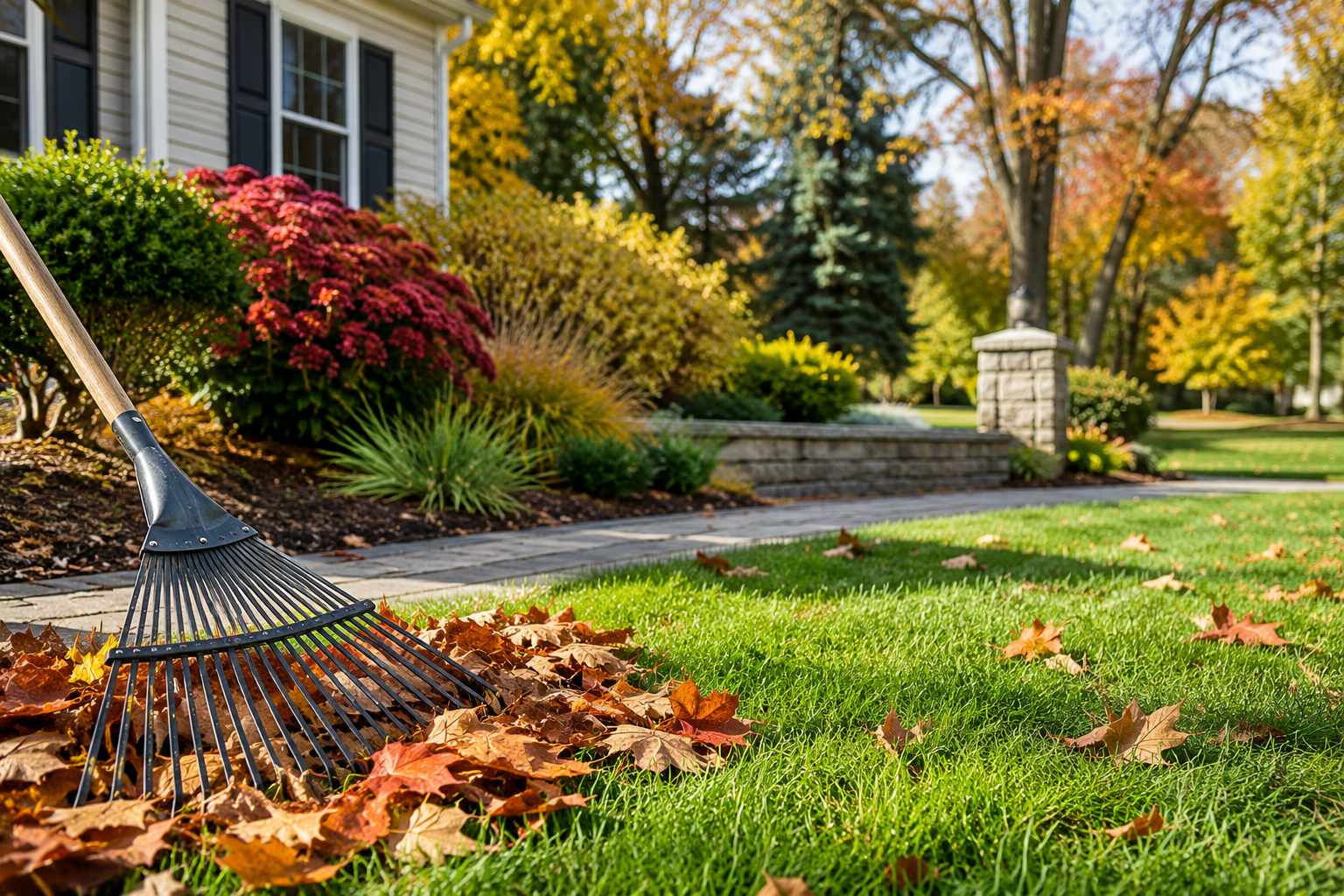
- Remove the last leaves. Wet leaves trapped under snow smother grass and invite snow mold. A light layer can be mulched with the mower. Heavy layers should be raked and removed.
- Pick up sticks, hoses, toys, and furniture. Anything left on the lawn all winter leaves a dead patch behind.
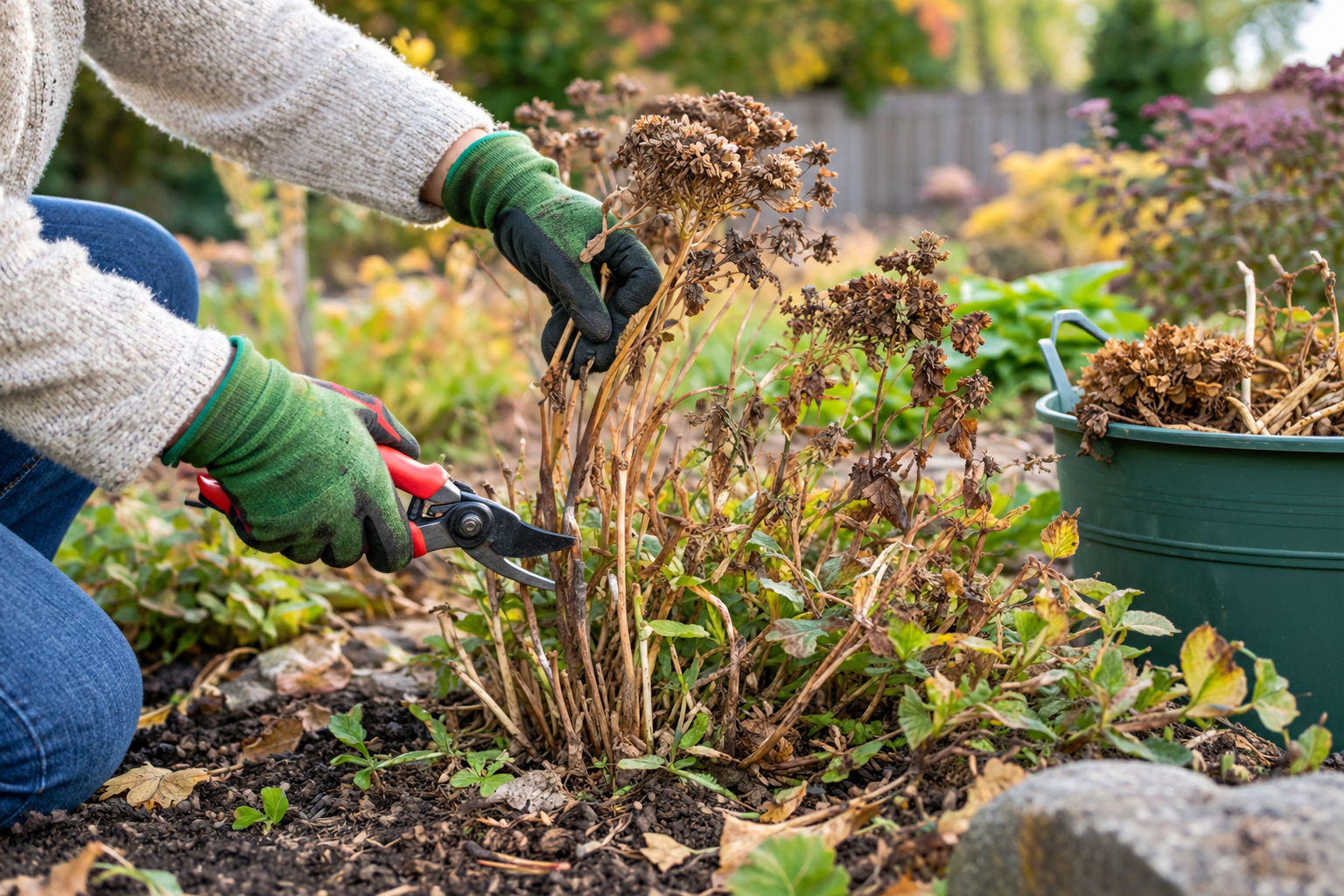
- Tidy the garden beds that border the lawn so debris does not blow back onto the grass.
- Clear leaves and soil from the edges of patios and walkways where they meet the turf.
If the end of the season gets away from you, our seasonal cleanup services can handle the final pass.
Protect the Lawn From Winter Damage
Most winter lawn damage on the North Shore comes from what happens on top of the snow, not the cold itself
- Mark lawn edges along driveways and walkways with stakes. Plows and snow blowers are less likely to tear up turf they can see.
- Go easy on de-icing salt near the lawn. Salt that melts off walkways and driveways can burn the grass along the edges. Shoveling early reduces how much you need.
- Stay off frozen grass. Frosted blades break under foot traffic and can leave a trail of dead grass in spring.
- Decide where snow piles will go before the first storm. Keep heavy piles off newly seeded areas and low spots that already hold water.
What Winterizing Will Not Fix
Winter prep helps a healthy lawn stay healthy. It will not fix a lawn with deeper problems. Compacted soil, poor drainage, heavy weed cover, and large thin areas need more than a final mow and a cleanup. If your lawn struggled all season, now is a good time to plan a renovation instead of waiting for spring to reveal the same problems.
Seeding, sodding, aeration, and grading all go more smoothly with a plan in place. For seeding, the strongest window in Massachusetts is often late summer, so a winter plan gives you time to prepare.
Get a Head Start on Spring
Winterizing your lawn is about restraint and timing. Cut to a moderate height, feed the soil based on a test, clear the surface, and protect the edges. Those steps give your grass its best start in April.
If your lawn needs more than a winter tune-up, Lassana’s can walk the property with you and plan the work ahead. Learn more about our lawn renovation services, or request a free estimate to start planning for spring.