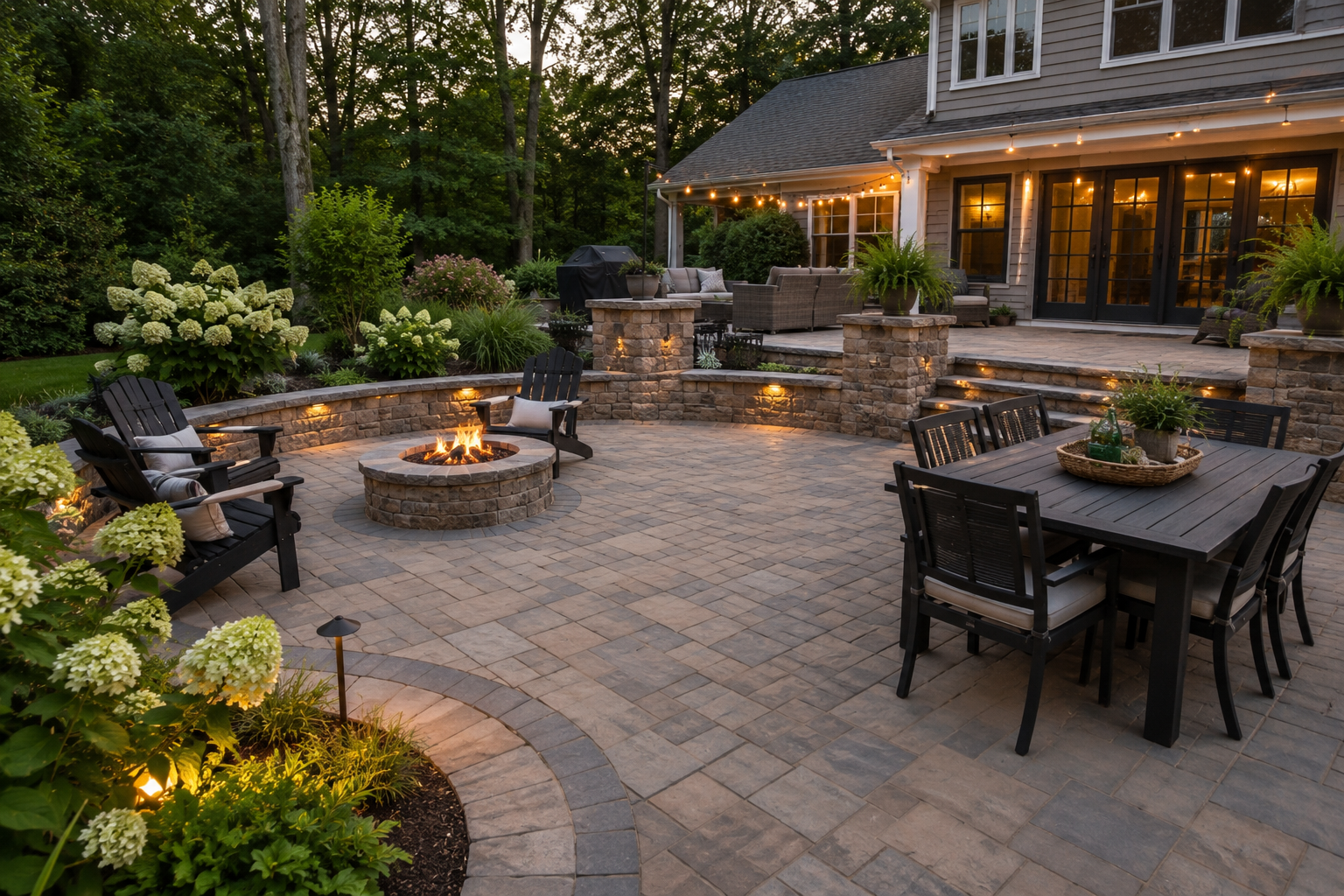
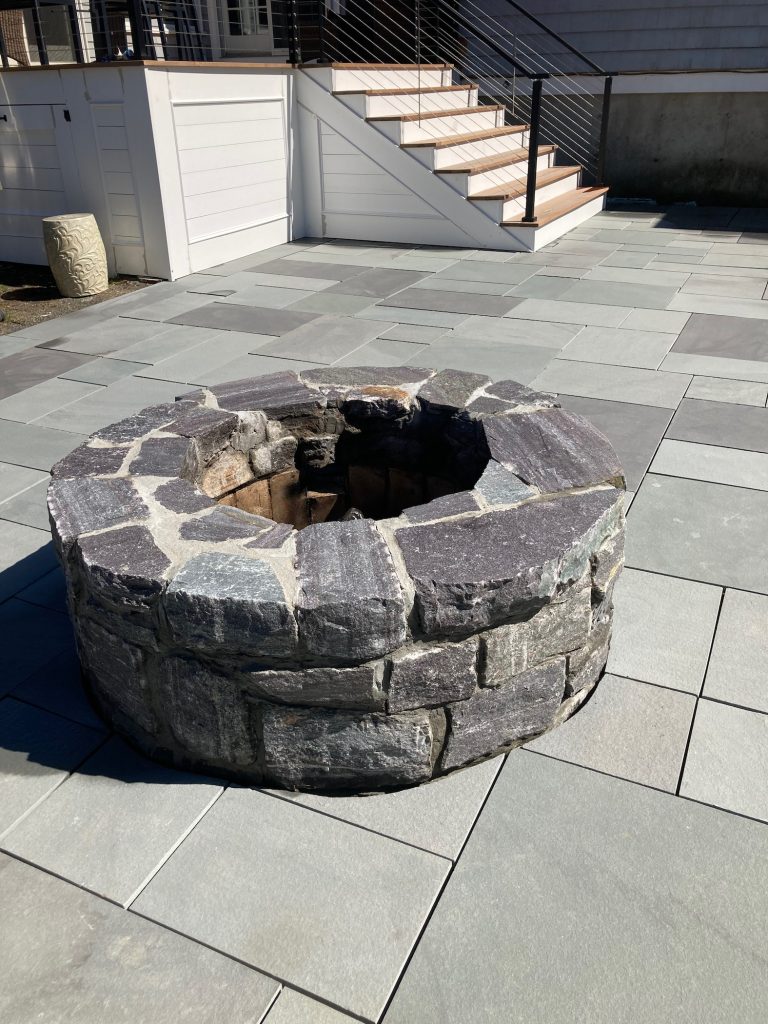
Cold weather brings crisp air and clear skies. It also brings the chance to enjoy your yard in a new way. Outdoor fireplaces and fire pits extend evenings and add a warm focal point. Masonry features last for years when cared for properly. This guide helps homeowners prepare stone and brick fire features for winter weather. It also covers safety, quick maintenance, and when to call a pro.
How outdoor fireplaces and fire pits perform in winter
Masonry holds heat and resists wear. Stone and brick cope with snow and ice better than many other materials. Still, freeze and thaw cycles put pressure on mortar joints and small cracks. Water that soaks into tiny gaps will expand and make those gaps larger. Wind and drifting snow add wear at corners. Salt used for ice control can stain or damage nearby stone. Regular, simple care reduces wear and keeps a fire feature ready to use.
Outdoor fireplaces and fire pits also need good airflow. A clear chimney or open vent keeps smoke moving up and away. A blocked chimney lets moisture sit and speeds decay. Keep openings clear of leaves and debris during fall cleanup.
Preparing outdoor fireplaces and fire pits for cold
Start with a visual check. Look for loose stones, crumbly mortar, or rusted metal parts. Light surface moss or dirt can be brushed away. Ash and charcoal should be removed once cool. For gas units, confirm the gas line is closed at the valve and capped per local code.
Follow this basic prep list:
- Remove ash and debris from the firebox.
- Brush or sweep soot from visible surfaces.
- Inspect mortar joints and note small cracks.
- Cap or cover openings to keep out animals and debris.
- Turn off and winterize gas lines per code.
Cleaning and a quick inspection take little time. They make a big difference over a long winter.
Protecting masonry surfaces
A breathable, water-repellent sealant helps slow water entry into stone. Apply product per manufacturer directions. Do not use non-breathable coatings. They trap moisture and speed damage. For mortar that shows wear, a small tuckpointing repair now prevents larger work in spring. A mason can patch joints and replace damaged brick or stone. That work keeps the structure safe and neat.
Safety and clearance around fire features
Clear space matters. Furniture, planters, and overhangs must stay well back from flames and hot surfaces. Keep a three-foot clear zone in front of open flames. Store wood at a safe distance on a dry rack. Do not stack firewood against the masonry. Sparks and embers find dry wood fast.
For ground-level fire pits, use a screen. For large fireplaces, use a sturdy spark guard. Keep a bucket of sand or a rated extinguisher handy during use. Teach family members where to stand and how to move away from heat. These habits cut the risk of burns and accidental fire spread.
Snow, ice, and de-icing near masonry
Avoid harsh salts near masonry. Road salts and calcium chloride can etch stone and stain masonry over time. Use sand or non-corrosive grit for traction on paths near the fire area. Move snow carefully with a plastic shovel to avoid chipping stone edges. If snow piles up on a fireplace mantle or hearth, remove it gently. Heavy, compacted snow can add weight and stress.
Seating, lighting, and cozy layout
Plan seating for comfort and safety. Arrange chairs in a semi-circle around the fire to create a view and a wind break. Use durable outdoor fabrics and store cushions indoors during wet weather. Add soft lighting on steps and paths for safe access. Low-voltage path lights and step lights work well and run on timers. Outdoor sconces near the seating area keep sightlines clear and create a warm mood.
Consider wind direction. Place the seating zone on the leeward side to keep smoke away from guests. Add a low stone wall or plant evergreen shrubs as a permanent wind buffer. That buffer also helps keep embers from drifting into landscape beds.
Quick winter maintenance schedule
Regular checks prevent big repairs. Use a simple schedule that fits the season.
- Late fall: Clean out ash, inspect mortar, and apply breathable sealant.
- Early winter: Cap chimney openings and check gas line valves.
- Mid-winter: Clear heavy snow from hearths and mantels without scraping stone.
- Late winter: Inspect for frost damage and schedule spring repairs if needed.
A short walk-through each month keeps a feature in good shape and ready for use.
When to call a professional
Some tasks require an expert. Call a mason for repointing, structural cracks, or loose stones. Hire a certified gas technician for any gas-pipe work, leak checks, or burner replacements. Use a chimney sweep for deep soot buildup and flue inspections. Professionals handle heavy repairs, assess structural issues, and keep any permits up to code.
Lassana’s Landscaping offers masonry services and seasonal inspections for outdoor fireplaces and fire pits. The team also repairs mortar, replaces damaged stone, and services gas connections. Find details at the outdoor fireplaces page and the masonry services page on the website.
Weatherproofing and long-term care
Good design reduces winter work. Proper drainage behind retaining hearths and around pit bases keeps water from pooling. A slight slope away from the feature helps runoff. Use frost-resistant stone where ground contact is likely. For freestanding pits, a solid base of compacted gravel gives stability and prevents shifting.
Over time, keep a watch on flashing and metal components. Rusted elements break down and let water reach interior masonry. Replace damaged metal and treat exposed fasteners to slow future rust.
Using fire features safely in cold weather
Cold nights make fire very appealing. Use lower, steady-burning fires for longer enjoyment and less smoke. Use seasoned firewood for cleaner burn. For gas units, check pilot lights and burners before the season. For wood-burning fireplaces, close dampers only after embers cool. Never leave a burning fire unattended. A screen and extinguisher reduce risks.
Design upgrades to consider now
Small upgrades add comfort and winter use. Consider adding:
- A stone hearth extension for more seating.
- Built-in wood storage to keep fuel dry.
- A metal spark screen tailored to the opening.
- Step lighting and low walls for wind control.
These updates improve usability and extend the season the feature sees frequent use. Discuss options with a masonry expert to match the home’s style and local codes.
Final notes and next steps
Outdoor fireplaces and fire pits reward careful care. Simple cleaning, regular checks, and timely repairs preserve function. Avoid harsh de-icers near masonry. Keep the area clear and use screens while burning. For structural work, gas service, or deep cleaning, rely on trained professionals.Lassana’s Landscaping helps homeowners ready their outdoor fireplaces and fire pits for winter. The team offers seasonal inspections, masonry repair, and gas-line checks. Learn more on the outdoor fireplaces page and the masonry services page.