Some landscaping advice sounds right and still costs you. A patio that settles after a few winters. A lawn fed again and again that stays thin. A retaining wall rebuilt because water had nowhere to go.
These landscaping myths come up often with North Shore homeowners. Below is what holds up, and how to put your budget where it lasts.
Why Landscaping Myths Get Expensive
Most myths are not wrong because they are silly. They are wrong because they skip a step. The skipped step is usually soil, drainage, or timing. Those are also the parts that are hardest and most expensive to fix later.
On the North Shore, freeze-thaw cycles, coastal wind, and heavy spring rain find every shortcut. Work that would hold up in a milder climate can fail here in a few seasons.
Myth 1: Spring Is the Best Time to Plant Grass Seed
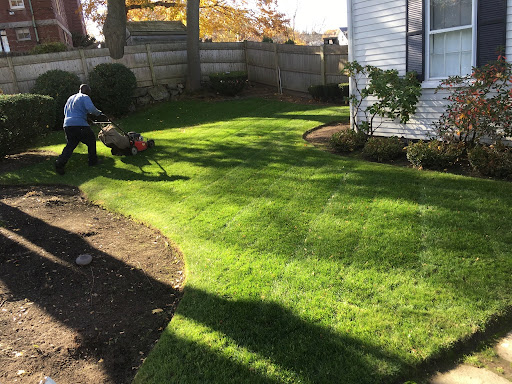
Spring feels like planting season, so many homeowners seed in April. For cool-season grasses in Massachusetts, late summer into early fall is usually the stronger window.
Warm soil and cooler air help new grass root before winter. Spring seed has to compete with crabgrass and then face summer heat with young roots. That often means seeding the same areas twice.
Our post on late summer seeding in Massachusetts explains the timing in more detail.
Myth 2: More Fertilizer Means a Greener Lawn
Extra fertilizer does not fix a struggling lawn. It can push quick top growth without stronger roots, and what the grass cannot use washes away.
A soil test is the cheaper first step. It shows what the lawn needs and what it already has. From there, building organic matter with compost and good mowing habits does more over time than another bag of product.
Myth 3: “Organic” Means the Same Thing on Every Label
Many homeowners pay more for products or services labeled organic. The label may not mean much.
According to the NOFA Organic Land Care Program, the word “organic” is unregulated in landscaping, unlike in agriculture. Ask any company what practices they follow, not just what they call themselves. At Lassana’s, organic care means soil health, natural compost, and plant choices suited to the site.
Myth 4: A Patio Is Just Pavers on Level Ground
The surface is the part you see. What sits under it decides how long it lasts.
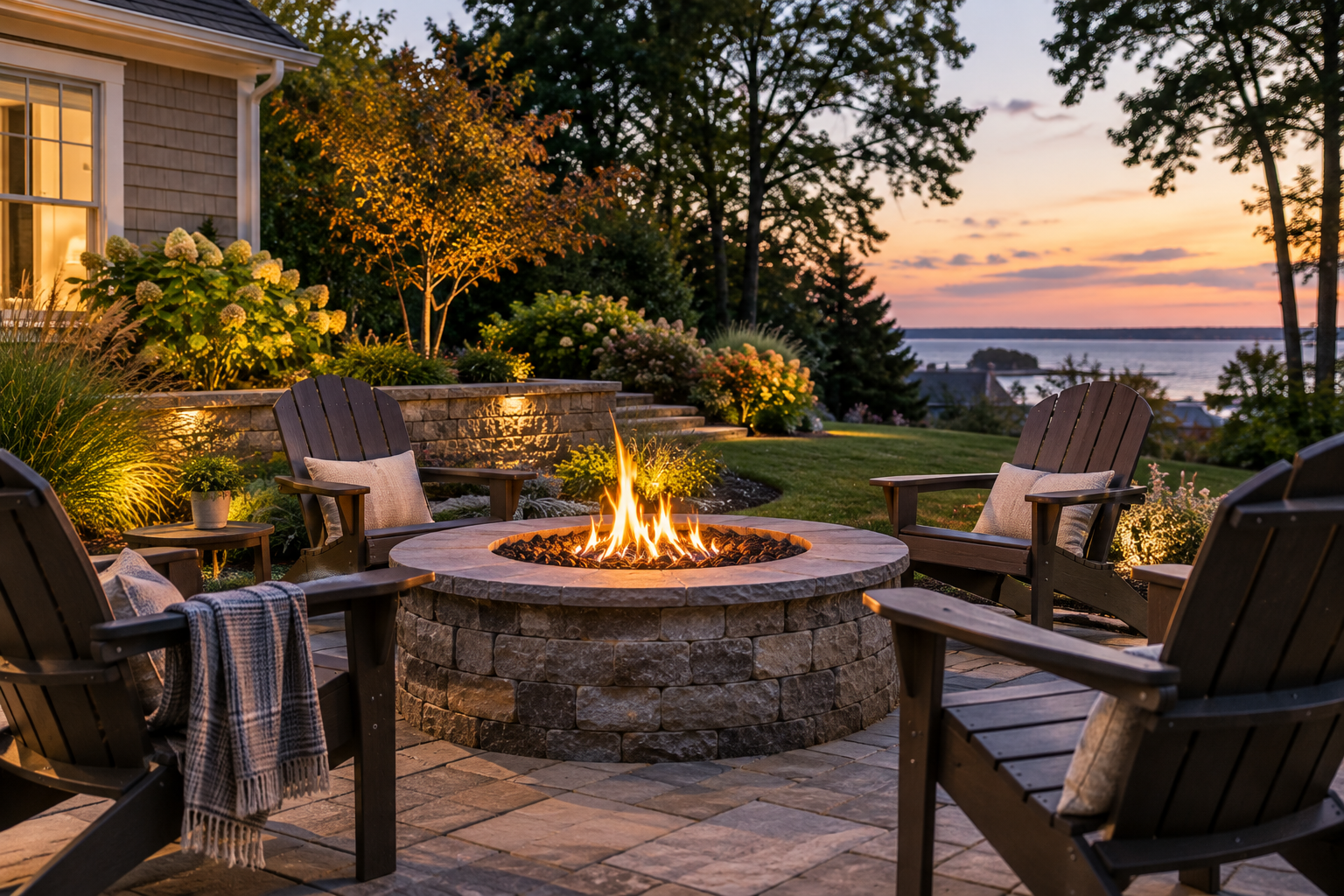
A durable patio starts with proper excavation, a compacted base, and a slight slope that moves water away from the house. Skip those steps and frost can heave the stones, low spots can hold water, and joints can open up. Fixing that usually means lifting the patio and starting over.
Before you compare quotes, ask each contractor how they build the base and handle drainage. Our patios and retaining walls page covers how we approach both.
Myth 5: A Retaining Wall Only Needs Strong Stone
Heavy stone helps, but water is what usually brings a wall down. Soil behind a wall holds rain and snowmelt. Without drainage, that water adds pressure, and when it freezes it pushes even harder.
Gravel backfill and a way for water to escape are part of the wall, not extras. Leaning, bulging, or water seeping through the face are early warnings. Our guide to retaining wall inspection after freeze-thaw cycles lists what to look for.
Myth 6: Plant First, Add the Hardscape Later
It is tempting to start with plants because they are smaller purchases. But patios, walls, and walkways need excavation, grading, and equipment access.
When hardscape comes second, new plantings and fresh lawn often get damaged or removed to make room. Planning the hardscape first protects what you plant. We explain the order in why hardscape should come before plantings.
Myth 7: Landscaping Does Not Pay You Back
Outdoor work can feel like a pure expense. The data says otherwise.
The 2023 Remodeling Impact Report: Outdoor Features from the National Association of Realtors and the National Association of Landscape Professionals estimates the following cost recovery at resale:
- Standard lawn care service: 217%
- Landscape maintenance: 104%
- Overall landscape upgrade: 100%
- New patio: 95%
Those numbers come with a condition. The work has to hold up. A patio that heaves or a lawn that thins out does not add the same value.
Myth 8: Doing It Yourself Is Always Cheaper
Plenty of yard work is a good fit for homeowners. Mowing, mulching, and planting a few perennials are all reasonable weekend projects.
Larger projects are different. Grading, drainage, base preparation, and moving heavy stone take equipment and experience. When those steps go wrong, the cost of fixing them often exceeds the cost of doing them right the first time.
How to Avoid Paying Twice
Most of these myths share the same fix. Start with the ground, plan the order of the work, and ask how each step will be done.
- Test the soil before you feed the lawn.
- Seed when the grass has the best chance to root.
- Ask about base, drainage, and slope on any hardscape quote.
- Build patios and walls before you plant around them.
Plan Your Next Project With Lassana’s
Lassana’s has served the North Shore since 2002, from lawn renovation to stone walls and patios. We handle projects from design through installation, so the steps that get skipped elsewhere are part of our plan from the start.
Winter is a good time to plan spring work. Read our tips on spring hardscape planning or request a free estimate to talk through your property.